




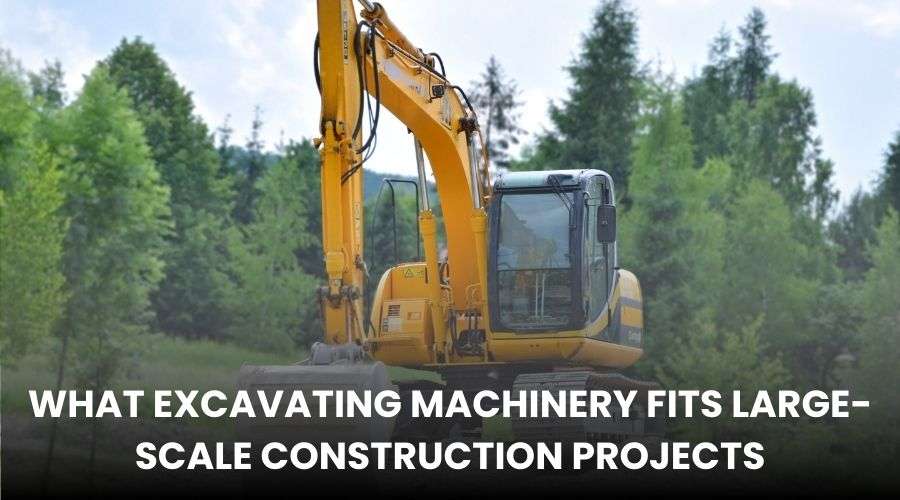
Large-scale earthworks require mega machinery like excavators. Even excavators are in different sizes, and each type has a different excavation capacity. When it comes to mega projects, there is always a need for an above 45-ton-excavator type because any smaller one will be inefficient. Therefore, a long-reach excavator and a dragline excavator are ideal choices in these conditions. These two types can wind up the task faster than other types in large-scale construction projects. You can see their capacities and functions to have a better idea.
The first one is a long-reach excavator, which is the second largest size of excavators. However, it is the largest size in terms of hydraulic pump types. So, you can consider it the largest size of hydraulic excavators. What makes it fit for large-scale construction projects is its reach. Here are some highlights you can see to imagine how useful it is for massive projects.
Due to its longest reach, it can also support the repair and maintenance of rivers and canals. All because of the reach that comes from a longer arm and precise control.
Its usual size is over 45 tons because of the boom length and overall structure. A long-range excavator has up to 100 feet of horizontal working range. That means it can cover a long distance in demolition and site clearance activities. Instead of using medium or large excavators, you can use a long-range excavator to multiply productivity. Its size and loading height are ideal for the precise demolition of high-rise buildings without damaging nearby properties.
Construction companies use this massive excavating machinery for bridge construction in abutment and foundational work. The same is for large-scale landscaping, which needs a long-reach excavator to expand the output level.
It is the ideal type of hydraulic-boom excavator for long-reach digging. In sites where medium and large excavators can’t perform extensive excavation, a long-reach excavator is a suitable choice. Similarly, it is suitable for deep foundation pit construction. This size of excavator can perform deep digging for the foundation of bridges and high-rise buildings in a shorter time. Likewise, it can reach heights better than other types for controlled demolition in crowded places.
Digging depth matters a lot in large-scale construction projects. That is why a long-reach excavator can shear, cut, and crush at a much more intensive rate than others. It can meet the requirements in maintenance of drainage canals through a long-reach boom. Similarly, river, lake, and other dredging activities will be more convenient and efficient through a long-reach excavator.
Then comes the largest size of any excavator, and it is a dragline excavator. It has a slightly different mechanism and structure from the rest of the types. It doesn’t have a hydraulic boom, but a dragline with a bucket. This different mechanism helps this machine perform extensive excavation and rubble lifting. Its bucket can lift more debris or material than any other type. That makes it a suitable choice for large-scale construction projects. It is an ideal choice for dredging in marine conditions. Since it can position itself with high stability on soft and uneven surfaces, it can perform better operations in underwater digging. All it has to do is drop its bucket in the water with the help of its extensive dragline for such operations.
The size and loading height are definitely larger than those of the long-reach excavator. It is because of its extensive dragline system, which allows it to dispatch a bucket and fetch debris easily. Its hoist and dragline system provides higher efficiency in mining and deep construction. Lifting large-scale debris from deep pits is easier through a dragline excavator. Likewise, it is a suitable type of excavator for land reclamation works.
Its shipping height is over 100 feet, which gives it an advantage in foundational construction. Its hoist rope raises and lowers its bucket to remove the debris for mega excavation at mega sites. Its dragline pulls the bucket towards the cabin in repetitive operations to clear the pit faster. The advantage of using a dragline excavator is that it reduces soil disruption through precise excavation. Even remote operations are possible where there is a higher risk involved. This excavator type has more advantages in hard-to-reach areas where the entire machine can’t get access.
A dragline excavator provides higher digging depth, which is suitable for horizontal distances. Likewise, it is an ideal choice for underwater and open-pit mining. Large-scale dredging and higher material removal become more efficient through a dragline excavator. That is why this machine supports port construction, especially in foundational works; it supports in the best way. It provides large material movement in one pass, which would require multiple attempts from other types.
So, here is the conclusion about which excavating machinery is the best for large-scale construction projects. Well, both types of excavators are useful because they work efficiently in their respective domains. A long-reach excavator is suitable for high-rise building demolition, deep digging, and foundational works. Also, it has better mobility and control. Besides, a dragline excavator is ideal for dredging, larger debris collection, and underwater material removal operations. Your project type and construction conditions will help you decide which one is better.
A crawler excavator depends entirely on its tracks for movement, st
READ FULLWheeled excavators represent a critical evolution in heavy machiner
READ FULLCrawler excavators stand as the most common heavy digging machines
READ FULL