




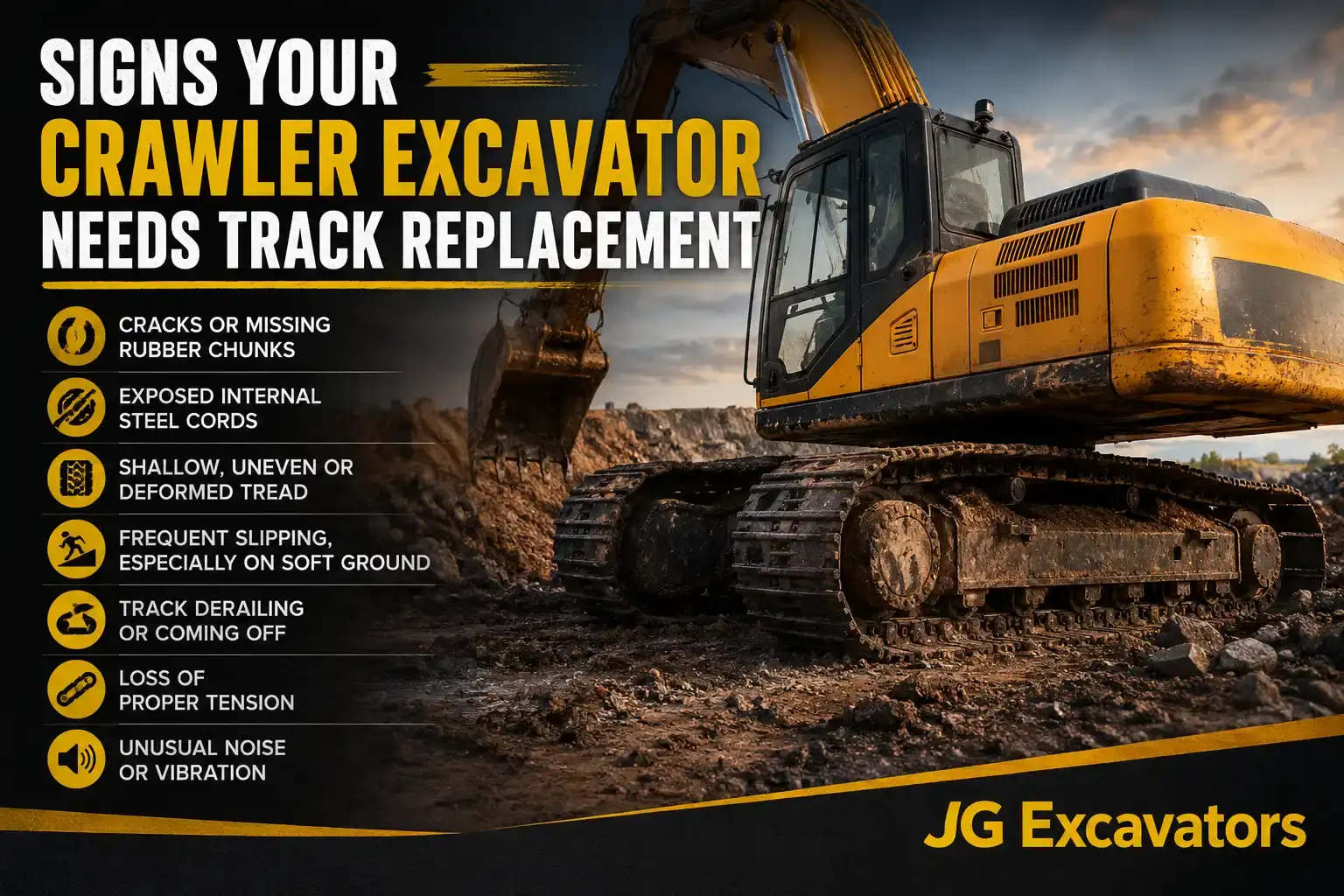
A crawler excavator depends entirely on its tracks for movement, stability and traction. Owners push these machines through mud, rock, gravel and uneven terrain every day, and the tracks absorb that stress first. Worn tracks reduce traction, strain the undercarriage, and slow down productivity long before most operators notice a real problem. Small warning signs often appear weeks or months before a track actually fails, and operators frequently ignore these early signals because the machine still runs and completes daily tasks without obvious trouble.
Contractors lose valuable uptime when a track fails mid-project, and repair costs climb sharply once a damaged track affects sprockets, rollers or the final drive. A worn track also increases fuel consumption, since the engine works harder to compensate for lost traction and grip. Neglected tracks can even damage other undercarriage components, turning a simple track swap into a much larger and more expensive repair job across the entire system. Delayed replacement rarely saves money in the long run and often shortens the lifespan of parts connected to the track.
Regular inspection catches these problems early and protects the rest of the undercarriage from unnecessary wear. Most warning signs develop gradually, and operators who inspect their machine on a consistent schedule can spot each stage before it escalates into a full breakdown. This blog lists every sign that indicates a crawler excavator needs new tracks, explained in detail so operators can recognize each one during daily walk-arounds or scheduled maintenance checks before small damage turns into costly downtime.
Deep cracks weaken the rubber structure of the track over time. Missing rubber chunks expose the internal layers underneath the surface. This damage reduces the track's overall strength and lowers operator safety during normal digging and lifting work. Small cracks can widen quickly under continuous load, especially in hot weather or on abrasive terrain. Operators who spot these cracks early can plan a replacement before the damage spreads further into the track's core structure.
Worn rubber eventually exposes the internal steel cords inside the track. This exposure signals structural failure rather than simple surface wear. Operators should replace the track immediately once these cords become visible, since continued use accelerates complete track breakdown. Exposed cords also rust quickly when they contact moisture, mud or standing water on the jobsite. This rust weakens the cords further and increases the risk of a sudden, complete track failure during operation.
Shallow tread reduces the track's grip on soil, rock and gravel surfaces. Uneven tread creates inconsistent traction across the entire length of the track. Deformed tread patterns disrupt the machine's stability and increase strain on the undercarriage system. Operators often notice reduced digging efficiency first, since the machine struggles to hold position on slopes or loose ground. Tread that no longer matches its original shape rarely restores itself through adjustment and typically requires full replacement.
Worn tracks slip frequently on soft or wet ground during normal operation. This slipping reduces digging efficiency and wastes fuel throughout the workday. Operators often notice this slipping first, since it directly affects how the machine handles daily tasks on the jobsite. Slipping also increases operator fatigue, since the machine requires constant correction to stay on course. Consistent slipping on ground that previously posed no problem strongly suggests the tracks have worn past a safe working limit.
A stretched or damaged track derails from the undercarriage during normal operation. This derailment stops work immediately and forces an emergency repair on site. Frequent derailing indicates that the track has lost its structural integrity and needs replacement soon. Repeated derailing also damages the sprockets and idlers that guide the track, since each derailment places sudden stress on these components. Operators who experience more than one derailing event should treat the track as unsafe for continued use.
Tracks naturally stretch after months of heavy use on demanding terrain. This stretching causes the track to lose proper tension over time. Operators who cannot restore correct tension through normal adjustment should treat this as a clear replacement signal. Tension that keeps loosening shortly after each adjustment points to advanced wear inside the track's internal structure. Continuing to operate a loose track accelerates wear on the rollers, idlers and sprockets that support it.
Grinding sounds indicate internal component wear inside the track assembly. Squealing noises often point to friction between damaged parts within the track. Clunking vibrations during movement usually signal uneven wear or a breakdown inside the track structure. These sounds typically grow louder and more frequent as the underlying damage worsens. Operators who notice new or unusual noise during normal operation should inspect the tracks and undercarriage before continuing heavy work.
Uneven wear appears when one side of the track wears faster than the other side. Misalignment usually causes this uneven pattern to develop over time. Poor tensioning can also create uneven wear, and both issues accelerate the track's overall deterioration. Operators can spot this wear by comparing tread depth across different sections of the same track. Left unaddressed, uneven wear shortens the track's service life and places extra strain on the machine's final drive.
Cracked pads reduce the track's contact with the ground during digging and travel. Missing pads eliminate traction entirely at that section of the track. This damage lowers the machine's digging efficiency and increases strain on the surrounding components. Pad damage often starts small and spreads quickly once moisture or debris enters the crack. Operators who catch cracked pads early can sometimes limit damage before it affects neighboring sections of the track.
Direct sunlight dries out rubber tracks over extended periods of exposure. This exposure causes dry rot to form inside the rubber material. Operators often notice surface cracks and stress marks on tracks that sit outdoors without proper storage or shade. Dry rot weakens the rubber even on machines that see light use, since the damage comes from sun exposure rather than operating hours. Storing equipment under cover slows this process but does not reverse existing damage.
Repeated curb contact stresses the track's outer edge during transport and site work. Wall scraping creates similar damage along the track's outer surface. This stress accelerates cracking and weakens the track well before its expected service life ends. Operators working in tight urban sites or parking structures face this risk more often than those working in open terrain. Consistent contact with hard edges should prompt more frequent track inspections.
Healthy sprocket teeth maintain a round, even shape during normal operation. Worn teeth develop a pointed or hooked appearance over time. This wear pattern signals that the track chain interacting with the sprocket also needs inspection. A hooked sprocket accelerates wear on a new track almost immediately after installation. Operators should check sprocket condition alongside the tracks themselves, since replacing one without the other often shortens the lifespan of both.
A healthy excavator moves in a straight line without drifting during travel. A worn track causes the machine to pull toward one side during operation. This drifting usually means one track has worn down faster than the other track. Operators may also notice the steering feels less responsive when one side works harder to compensate. Consistent drifting during straight-line travel should prompt an immediate comparison of both tracks for wear differences. Operators can confirm this issue by parking the machine on flat ground and measuring tread depth on each track separately, since a measurable gap between the two confirms uneven wear rather than a temporary steering fault.
Cracks, missing rubber and exposed steel cords weaken the track's core structure from the inside out. Shallow tread and frequent slipping reduce grip on soft or uneven ground throughout the workday. Derailing, loose tension and unusual noise point directly to internal wear inside the track assembly. Uneven wear patterns, damaged pads and sun-related dry rot accelerate deterioration well before the expected service life ends. Curb damage, worn sprocket teeth and one-sided drifting round out the full list of warning signs covered here. Operators who catch these signs early protect the undercarriage, reduce repair costs and avoid unplanned downtime on the jobsite. Consistent inspection habits turn these warning signs into planned maintenance instead of unexpected breakdowns.
Worn tracks slow down projects and raise repair costs across the entire undercarriage system. Choosing durable equipment from the start reduces how often operators face these warning signs in the first place.
As a trusted China Crawler Excavator Manufacturer, JG Excavators builds machines engineered for tough terrain and daily heavy-duty use. Contact our team today to find a crawler excavator built to last.
A crawler excavator depends entirely on its tracks for movement, st
READ FULLWheeled excavators represent a critical evolution in heavy machiner
READ FULLCrawler excavators stand as the most common heavy digging machines
READ FULL