




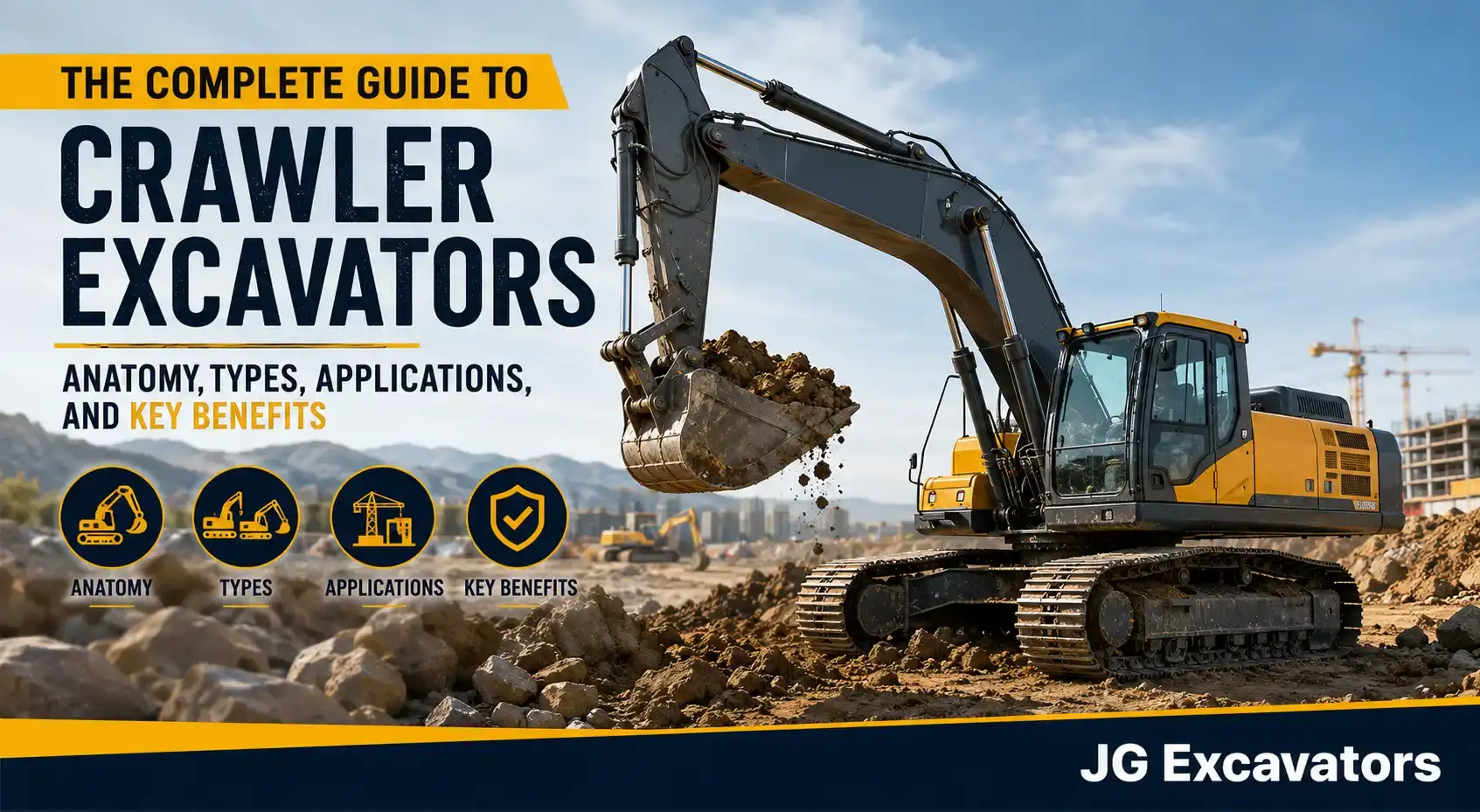
Crawler excavators stand as the most common heavy digging machines on construction projects worldwide. These massive machines use a continuous track system instead of tires to move across difficult ground. They combine high hydraulic power, a rotating upper cabin, and a strong front arm to dig soil, lift rocks, and clear heavy debris.
The track design is what makes these excavators highly stable. By spreading the total weight of the heavy machine over a large surface area, the tracks stop the excavator from sinking into mud, wet clay, or soft sand. This simple physical concept allows construction crews to operate in areas where standard trucks and wheeled machines would get stuck instantly.
Understanding how these machines work is very helpful for any business looking to buy or rent heavy equipment. Crawler excavators offer major advantages over wheeled models, especially when working on steep hills, rocky terrain, or muddy fields. This guide will walk you through their parts, types, uses, and benefits.
A crawler excavator is a heavy construction machine designed primarily for digging, lifting, and moving heavy materials. The machine consists of a lower track base called the undercarriage, an upper rotating cabin assembly known as the house, and a long multi-jointed hydraulic arm.
The core working concept relies on high-pressure fluid power. A diesel engine turns heavy hydraulic pumps, which force high-pressure oil through thick steel tubes and flexible rubber hoses. This pressurized oil pushes and pulls large metal cylinders. The cylinders act like human muscles, extending and retracting to move the heavy steel boom, arm, and bucket with thousands of pounds of force.
The continuous track system is the defining feature of a crawler excavator. Instead of riding on rubber tires, the machine moves on two wide belts made of heavy steel links or thick rubber pads. This design distributes the massive weight of the machine over a large ground area.
By spreading the weight, the tracks lower the pressure placed on the ground underneath. This low ground pressure keeps the machine from sinking into soft mud, wet clay, or loose gravel. Additionally, the tracks have raised steel ridges that bite into the earth. This grip allows the machine to climb steep mud hills and work safely on unstable riverbanks where wheeled vehicles would slide or tip.
While both machines perform similar digging tasks, they are built for entirely different working conditions. The main difference lies in how they travel and interact with the ground surface.
Crawler excavators are slow, usually traveling at speeds between 3 to 5 kilometers per hour. They must be transported between distant jobsites on heavy flatbed trailers. However, they provide incredible stability and do not need support legs to dig. Wheeled excavators can drive directly on paved city streets at speeds up to 30 kilometers per hour. Yet, they require down-facing stabilizer legs to keep from tipping while digging, and they easily get stuck in soft soil.
Procurement Tip: Looking to upgrade your fleet with heavy-duty machinery built for extreme terrains? Connect with a verified wholesale crawler excavator partner today to get factory-direct quotes and custom configurations for your next big project.
The undercarriage is the foundation of the crawler excavator. It supports the entire weight of the upper machine, handles all travel movements, and absorbs the heavy shocks generated during tough digging operations.
Track shoes are the individual plates that come into direct contact with the ground. Steel track shoes are made of high-strength alloy steel, often featuring single, double, or triple grousers. Grousers are raised ridges that dig into the soil to provide traction.
Rubber track shoes are made of durable rubber compounds reinforced with internal steel cords. They are used on small excavators to prevent damage to concrete, brick pathways, and asphalt streets.
The track chain is a continuous loop of heavy steel links pinned together. It acts like a metal road for the excavator rollers to run on. Each link is connected by a high-strength steel pin and a matching bushing. In modern heavy excavators, these pins and bushings are sealed and pre-lubricated with grease. This sealing keeps abrasive dirt out of the moving joints, which extends the life of the track chain.
Rollers guide the track chain as it moves around the track frame. Bottom rollers, also called track rollers, are mounted under the track frame to carry the heavy weight of the machine. They distribute this weight evenly along the track chain. Carrier rollers are smaller rollers mounted on top of the track frame. They support the upper span of the track chain, keeping it from sagging or swinging during travel.
The front idler is a large, smooth steel wheel located at the front of each track frame. It guides the track chain as it loops around the end. Behind each idler is a heavy-duty tensioner spring, which works alongside a grease-filled cylinder. By pumping grease into the cylinder, you push the idler forward to tighten the track chain. The heavy spring absorbs sudden impacts if a rock gets caught in the track, protecting the chain from snapping.
The drive sprocket is a heavy, tooth-rimmed steel wheel located at the back of each track frame. The teeth of the sprocket engage directly with the bushings in the track chain. As the hydraulic travel motor spins the sprocket, the teeth pull the chain links, driving the machine forward or backward. These sprockets are heat-treated to resist wear from constant friction with dirt and mud.
Travel motors are high-pressure hydraulic motors tucked safely inside the back of each track frame. They convert hydraulic fluid pressure into rotary motion. The final drive is a system of planetary gears connected to the travel motor. These gears reduce the high speed of the motor and multiply its torque. This mechanical advantage gives the excavator the immense power needed to climb steep hills and push through deep mud.
The upper structure, often called the house, is the rotating top half of the excavator. It holds the engine, hydraulic pumps, operator cabin, and counterweight, spinning a full 360 degrees.
The diesel engine is the main power source for the entire machine. It burns diesel fuel to turn a heavy drive shaft. Excavators use turbo-charged diesel engines designed to deliver high torque at low engine speeds. This design saves fuel while providing the power needed to drive the hydraulic system under heavy, continuous loads.
The main hydraulic pump is connected directly to the engine's drive shaft. It draws hydraulic oil from the reservoir and pumps it at pressures up to 5,000 pounds per square inch. The control valve block acts like the mechanical brain of the system. It contains several spool valves that open and close to direct the pressurized oil to specific cylinders or travel motors when the operator moves the joysticks.
The cabin is the operator's control center. For safety, modern cabins must meet Roll-Over Protective Structure (ROPS) and Falling Object Protective Structure (FOPS) safety standards. The cabin frame is built with heavy-gauge steel tubing to protect the driver if the machine rolls over or if heavy rocks fall from above. It features large glass windows, an adjustable suspension seat, and climate controls to reduce driver fatigue.
The counterweight is a massive block of solid cast iron or steel mounted at the very rear of the upper structure. Its heavy weight balances the forces created when the excavator reaches out and lifts a full bucket of dirt. Without a properly balanced counterweight, the machine would tip forward during heavy digging, raising the tracks off the ground.
The slewing ring is a giant, circular gear bearing mounted between the lower undercarriage and the upper frame. The swing motor, located in the upper frame, has a small gear called a pinion that meshes with the teeth of the slewing ring. When the swing motor spins, the pinion walks around the slewing ring, allowing the entire upper house to rotate smoothly in any direction.
The fuel tank holds the diesel fuel needed to run the engine for long shifts. The hydraulic fluid tank holds the specialized oil used to power the hydraulic system. This tank is equipped with internal baffles to prevent the oil from sloshing. It also has return-line filters to trap tiny metal wear particles, keeping the hydraulic oil clean and free of abrasive grit.
The front working attachment, or work group, is the set of mechanical arms and tools mounted to the front of the upper frame. It performs the physical tasks of digging, lifting, and placing materials.
The boom is the first and largest section of the front arm assembly, pinned directly to the revolving frame. A mono boom is a single, bent steel box structure. It is the most common type because it is incredibly strong, simple to maintain, and perfect for deep digging. A two-piece boom has an extra hydraulic joint in the middle. This design allows the operator to adjust the angle of the boom, providing a better reach in tight spaces and higher lifting clearance.
The arm, also known as the stick or dipper, is the second section of the work group. It is pinned to the end of the boom. The arm moves forward and backward to draw the bucket through the soil. Its length affects both the digging depth and the reaching distance of the machine. Shorter arms provide more breakout force, while longer arms provide greater reach.
The bucket linkage is a set of steel bars shaped like the letter H, mounted at the tip of the arm. It connects the bucket hydraulic cylinder to the bucket itself. This linkage converts the straight-line push of the hydraulic cylinder into a smooth, curling rotation of the bucket. This allows the operator to scoop up material and hold it securely without spilling.
These are heavy-duty, double-acting metal cylinders that control the movements of the work group. The boom cylinders are mounted to the upper frame and lift the entire arm up and down. The arm cylinder is mounted on top of the boom and pushes the stick in and out. The bucket cylinder is mounted on the stick and controls the curling action of the digging bucket.
The bucket is the steel container used to dig and scoop soil. The leading edge of the bucket has replaceable steel teeth that penetrate hard ground. These teeth fit onto steel adapters welded to the bucket lip. Side cutters are bolted or welded to the sides of the bucket. They cut a clean trench wall, reducing friction on the bucket sides and protecting the bucket shell from premature wear.
The operating weight of an excavator determines its size, engine power, digging depth, and lifting capacity. Choosing the right size class is important for balancing power and transport costs.
Micro excavators are the smallest class of digging machines, weighing less than 2,000 kilograms. They are designed to fit through standard garden gates and interior doorways. They run on narrow rubber tracks that can retract to squeeze through tight spaces. These machines are used for backyard landscaping, digging small utility trenches, and light indoor demolition tasks.
Mini excavators weigh between 2 and 6 metric tons. They are small enough to be towed behind a standard pickup truck on a utility trailer, making them easy to transport. They provide more digging depth and bucket force than micro models, making them perfect for residential construction, water line installations, and grading small yards.
B2B Procurement Note: Need compact power for tight urban jobsites? Partnering with a reliable mini excavator exporter ensures you get international-standard compact units with certified engines and versatile attachment options.
Midi excavators weigh between 6 and 10 metric tons. They fill the gap between small residential machines and large commercial units. They offer increased lifting capacity and digging depth while remaining small enough to work near busy streets without closing down multiple traffic lanes.
Medium excavators are the most common machines found on commercial construction sites. They weigh between 10 and 25 metric tons and are built for heavy-duty digging, such as basement foundations, commercial sewer lines, and large road construction projects. They offer a great balance of power, depth, and ease of transport on standard flatbed trucks.
Large excavators weigh between 25 and 50 metric tons. These heavy-duty machines are built for mass earthmoving projects, large civil engineering works, and deep sewer installations. They feature powerful engines and high-flow hydraulic systems to move hundreds of cubic yards of soil or rock every hour.
These massive machines weigh from 50 to over 100 metric tons. They are designed specifically for open-pit mining operations and large stone quarries. They feature massive buckets that can scoop up to 10 cubic yards of rock in a single pass, allowing them to fill giant off-road dump trucks in just a few cycles.
The swing configuration refers to how far the rear counterweight extends beyond the width of the tracks when the upper cabin rotates.
Conventional tail swing excavators have a counterweight that extends significantly past the tracks when the machine spins. This design allows for a heavy, deep counterweight, which provides maximum stability and lifting capacity. However, the operator must carefully monitor the rear of the machine to avoid hitting nearby walls, trees, or utility poles.
On zero tail swing models, the upper frame rotates completely within the width of the tracks. The counterweight does not stick out past the track line at all. This design allows the machine to work right next to brick walls, highway barriers, or trees without any danger of the rear swinging into an obstacle. It is highly popular for tight urban jobsites, and many buyers shopping for this footprint search specifically under compact excavators rather than the standard crawler lineup.
Reduced-radius models are a hybrid option. The counterweight extends slightly past the tracks, but much less than on conventional models. This design offers a smart middle ground. It provides better stability and lifting power than a zero tail swing model while keeping the rear swing tight enough to work safely in narrow work zones.
Excavators can also be categorized by the design of their front arm, which changes how they reach and dig.
Standard reach models use a balanced boom and arm combination designed for general construction work. They are optimized to provide the best balance of digging depth, bucket breakout force, and cycle speed. They are the most versatile option for general digging and truck loading.
Long reach excavators feature exceptionally long booms and arms. Some models can reach up to 60 feet or more. They are built for specialized tasks, such as dredging deep canal beds from the shore, clearing mud from lakes, or sloping deep embankments. Because of the long arm, they must use smaller, lighter buckets to prevent the machine from tipping over.
Mass excavation models use a shorter, heavily reinforced boom and arm. This short arm design allows the machine to use a much larger bucket and deliver extreme digging forces. They are built specifically for rapidly loading massive amounts of blasted rock or heavy soil into dump trucks on mining and large-scale earthmoving projects.
In civil engineering, crawler excavators are the primary tool for preparing ground surfaces and installing large structures.
Before a building can rise, crews must dig deep into the earth to reach solid bedrock or stable soil layers. Crawler excavators use their powerful hydraulic systems to dig out massive foundation pits, loading the excavated dirt into waiting dump trucks. Their stable track base allows them to work safely at the bottom of steep, muddy excavation pits.
Installing utility lines requires long, clean trenches cut to precise depths. Medium and mini excavators use specialized narrow buckets to dig these trenches across miles of terrain. The operator can dig smoothly around existing pipes and wires using the precise hydraulic controls of the machine.
Before pouring concrete slabs or paving roads, the ground must be perfectly graded. Excavators equipped with wide, toothless grading buckets are used to scrape off high spots and fill in low areas. This process creates a flat, compacted base for construction.
For residential homes and commercial offices, excavators dig the rectangular pits needed for basements. The crawler track design allows the machine to drive down into the sloping pit, dig out the corners with high precision, and climb back out even when the soil is wet and slippery.
Building roads and highways requires moving large volumes of material across miles of varying terrain.
When building highways through hilly areas, crews must cut away hillsides and use that dirt to fill in low valleys. Crawler excavators dig out the high clay and rock slopes, loading the material into articulated dump trucks. Their traction allows them to walk up and down steep hillsides during this process.
Bridges require deep, concrete-reinforced support structures called abutments. Excavators dig the deep foundation shafts and pits for these structures, often working near active waterways or tight highway medians where stability is highly important.
To prevent flooding along highways and in cities, large concrete drainage channels and canals are built. Crawler excavators shape the sloped sides of these channels, ensuring the soil is cut at the correct angle to prevent the banks from collapsing.
Preparing a track bed for trains requires clearing a wide, flat path through forests, hills, and rock formations. Excavators clear the trees, cut through rock barriers, and lay down the thick gravel bed that supports the heavy wooden and concrete railway ties.
In mining, machines must run continuously under the harshest and most abrasive conditions possible.
Overburden is the thick layer of useless soil, sand, and rock that covers valuable coal or metal ore deposits. Large crawler excavators work day and night to scoop away this overburden, exposing the minerals underneath so they can be mined.
In soft rock or coal mines, crawler excavators can dig the valuable material directly out of the seam without blasting. The high hydraulic pressure forces the bucket teeth deep into the rock face, breaking it loose and scooping it up in one movement.
Once rock is blasted loose in a quarry, it must be loaded into massive haul trucks for transport to the crushing plant. Large mining excavators handle this abrasive rock, using heavy-duty rock buckets reinforced with thick wear plates to resist scratching and impacts.
In marble and granite quarries, excavators are used to move and lift massive rectangular blocks of stone. Equipped with heavy hydraulic grapples or lifting hooks, the excavators handle these valuable stone blocks without cracking them.
Tearing down structures requires controlled power to prevent accidents and damage to nearby properties.
Excavators are perfect for structural demolition. Equipped with hydraulic concrete pulverizers or heavy steel shears, they can safely bite through concrete columns, cut steel beams, and tear down brick walls from a safe distance.
To repave highways or rebuild city plazas, old concrete must be broken up. Excavators equipped with heavy hydraulic breakers, also called hammers, deliver rapid, high-impact blows to shatter thick concrete pavements into manageable pieces.
After a building is demolished, the rubble must be sorted for recycling. Excavators equipped with sorting grapples can separate valuable steel reinforcing bars from concrete chunks, loading each material into separate trucks.
In forestry and farming, machines must travel across soft, uneven ground without damaging the surrounding soil.
Clearing land for farming or construction requires removing deep tree roots and heavy brush. Crawler excavators use their bucket teeth to dig around and pop out stubborn tree stumps, shaking off the excess dirt before stacking them.
Farmers use excavators to dig large holding ponds and build earthen dams to store water for livestock and crops. The tracks of the excavator help pack down the clay on the dam walls, creating a watertight seal.
Water must be guided across miles of crops. Excavators dig the long network of irrigation ditches and clean out built-up weeds and silt over time, keeping the water flowing smoothly.
To allow logging trucks to reach timber harvesting zones, temporary roads must be cut through thick forests. Excavators clear the path, remove boulders, and dig drainage ditches along the side of the new road to prevent mud washouts.
Working near water requires highly stable machines that can handle wet, muddy environments.
Over time, rivers and lakes fill up with silt and mud, which blocks water flow and boat travel. Long reach excavators sit on the shore or on floating barges, scooping the wet silt out of the water and placing it on dry land to dry.
Building commercial docks and ports requires driving steel piles into the seabed and placing heavy concrete blocks. Excavators working from floating platforms assist with these heavy underwater construction tasks.
Canals must be kept at a constant depth to prevent ships from running aground. Excavators perform routine maintenance by scooping out sandbars and built-up soil from the canal channel.
To prevent ocean waves or fast river currents from washing away valuable land, shores are lined with large, interlocking stones called riprap. Excavators place these heavy rocks along the shoreline, fitting them together like a puzzle to absorb the force of the water.
The physical design of crawler tracks provides several major safety and performance benefits over wheeled machinery.
Because a crawler excavator spreads its weight over a wide track area, its ground pressure is very low. For example, a massive 20-ton crawler excavator often exerts less pressure on the ground than a human foot. This low pressure prevents the machine from sinking into soft mud, bogs, and sandy riverbanks, allowing work to continue in wet weather.
The steel grousers on the track shoes bite deep into loose soil and slippery clay. This high traction allows crawler excavators to climb steep, muddy slopes up to 35 degrees. Wheeled machines would lose grip, spinning their tires and sliding down the hill.
When lifting heavy concrete pipes or steel beams, the machine needs a solid base. The wide, heavy track frame provides a large, stable footprint. This stability prevents the excavator from swaying or tipping while lifting heavy loads at full reach.
Crawler excavators are engineered to deliver maximum digging force and fast cycle times.
Breakout force is the maximum digging power the cylinder can apply to the tip of the bucket or stick. Because crawler excavators are built with heavy-duty structural steel and high-pressure hydraulics, they can deliver massive breakout forces, allowing them to tear through hard clay and rocky soil.
Cycle time is the time it takes to scoop up dirt, spin the cabin, dump the material, spin back, and drop the arm again. Modern excavators use variable-displacement piston pumps that adjust oil flow in real time. This system speeds up movements when resistance is low, resulting in faster cycle times and higher daily production.
Because crawler models are heavier and sit closer to the ground, they have a lower center of gravity. This design allows them to lift much heavier loads than wheeled models of the same size, making them the preferred choice for heavy pipe laying and utility work.
These machines are built to withstand years of abrasive wear, heavy impacts, and extreme weather.
The track frames are constructed from thick, high-tensile structural steel plates welded into a rigid box shape. This design resists twisting forces when the machine travels over large rocks and uneven ground, protecting the rollers and drive motors from damage.
The parts that face constant friction, such as bucket teeth, side cutters, and track guide guards, are made from hardened alloy steels like manganese steel. These materials are highly resistant to scratching and wear, extending the time between replacement parts.
The boom and arm are hollow box structures built with internal steel reinforcement plates called baffles. These internal plates distribute structural stresses evenly throughout the arm, preventing cracks from forming in the metal welds during heavy digging operations.
A crawler excavator is not just a digging machine; it is a multi-functional tool carrier.
Quick couplers are hydraulic or mechanical locking devices mounted to the end of the arm. They allow the operator to change attachments in under a minute without leaving the cabin. An operator can switch from a digging bucket to a hydraulic hammer with the flip of a switch inside the cab.
Modern excavators feature auxiliary hydraulic piping mounted along the boom and arm. This auxiliary system provides high-pressure oil flow to drive specialized tools, including hydraulic breakers for concrete, rotary augers for drilling post holes, and heavy grapples for sorting demolition debris.
Because of this high attachment versatility, a single excavator can handle multiple phases of a project. The machine can clear trees with a grapple, shatter concrete with a breaker, dig foundation trenches with a bucket, and backfill the holes with a grading plate. This multi-tasking ability reduces the number of machines needed on a jobsite, saving money for the business.
Crawler excavators represent a major engineering achievement in heavy machinery design. By integrating a continuous track base with a high-pressure hydraulic system and a 360-degree rotating upper frame, these machines deliver the ultimate combination of traction, stability, and digging power. They can perform heavy-duty work on wet clay, steep rock hillsides, and soft mud where wheeled excavators simply cannot operate.
Understanding the structural anatomy of the machine is important when selecting a crawler excavator. The lower undercarriage contains track chains, rollers, and sprockets built to handle continuous friction and mud. The upper rotating frame houses the high-torque diesel engine and main hydraulic pump, which work together to drive the front arm cylinders. Every component, from the replaceable steel bucket teeth to the heavy-duty counterweight, is designed to maximize stability and digging force.
Selecting the right operating weight and swing configuration ensures that the excavator meets the specific needs of your jobsite. Whether you are using a mini excavator for tight residential plumbing trenches or a massive mining excavator to load haul trucks in a quarry, these machines offer unmatched durability and high performance. With their wide compatibility with hydraulic attachments, crawler excavators remain the central powerhouse of the modern construction, mining, and infrastructure industries.
Selecting the right heavy machinery is critical for the success of your construction projects and the growth of your equipment fleet. JG Excavators designs and builds high-performance crawler excavators engineered to handle the toughest digging and lifting tasks. Our machines are built with high-strength structural steel, advanced hydraulic systems, and fuel-efficient diesel engines to guarantee maximum uptime on your jobsites. We offer a full range of excavator models, from compact mini units to large earthmoving machines, all backed by comprehensive technical support and ready access to replacement parts.
Partnering with a professional China crawler excavator supplier allows you to secure premium heavy machinery at competitive factory-direct wholesale prices. We work closely with fleet managers, construction companies, and equipment distributors worldwide to provide custom machine configurations, specialized hydraulic attachments, and reliable international shipping logistics. Contact our engineering and sales team today to discuss your specific machinery requirements, request customized price quotes, and discover how our durable excavators can improve your daily digging performance.
A crawler excavator depends entirely on its tracks for movement, st
READ FULLWheeled excavators represent a critical evolution in heavy machiner
READ FULLCrawler excavators stand as the most common heavy digging machines
READ FULL

