




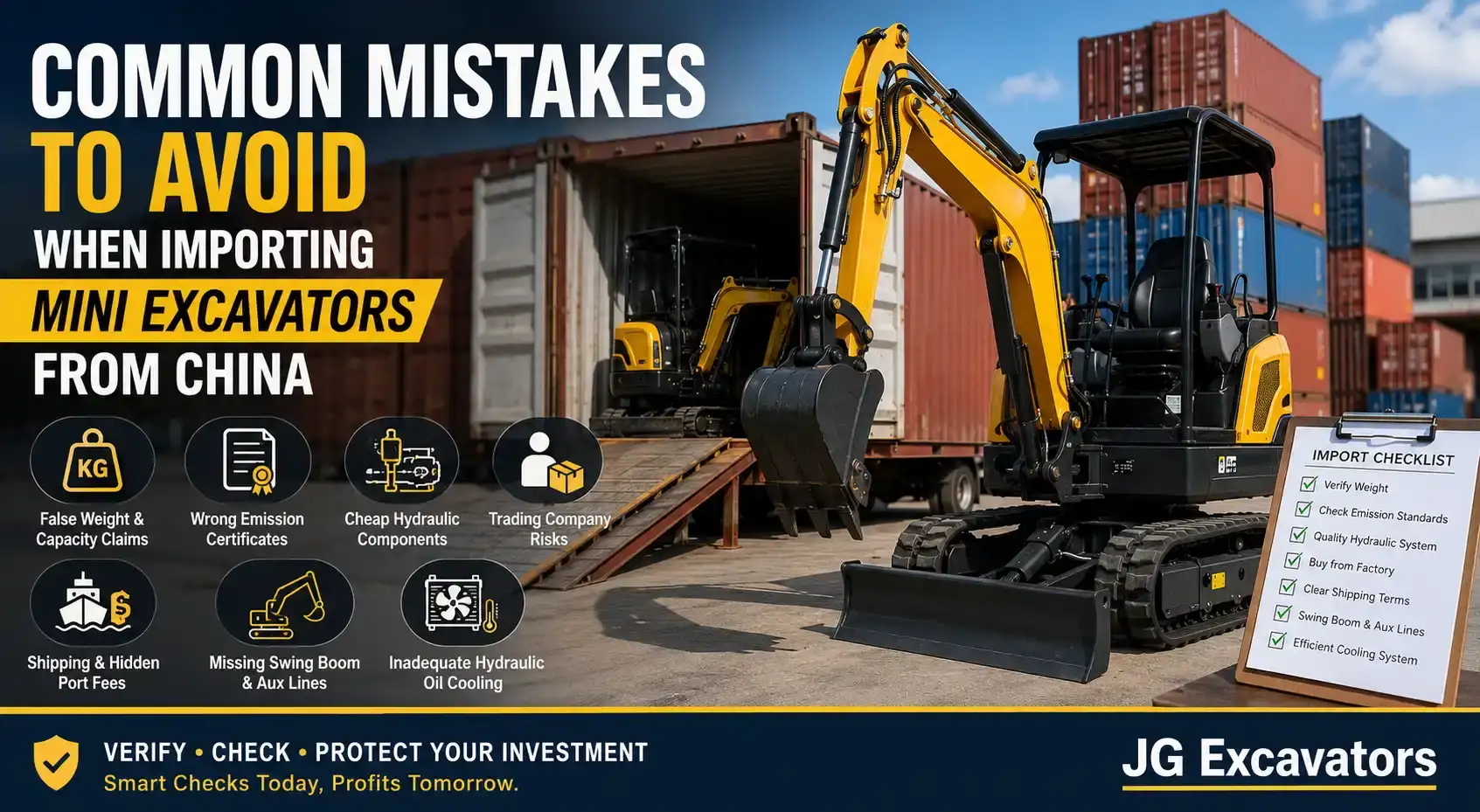
Buying compact construction machinery from overseas suppliers can significantly lower your equipment costs. Many international buyers, rental business owners, and landscaping contractors look for a reliable mini excavator exporter in China to upgrade their machinery fleets without spending a fortune. However, ordering small earthmovers through digital platforms involves hidden risks that can quickly turn a good deal into a major financial loss. Buyers often make assumptions about mechanical specifications, shipping logistics, and customs compliance rules without performing deep physical or legal verifications on the actual machines.
These purchasing mistakes usually lead to severe operational issues, unexpected port expenses, or confiscated machinery at foreign border checkpoints. If you do not know the exact technical parameters of small tracked diggers, you might receive units with underpowered hydraulic systems or illegal diesel engines. This detailed guide highlights the most common mistakes global buyers make when purchasing compact excavators from Chinese manufacturing zones. Understanding these specific structural, legal, and operational errors will help you protect your investment capital and secure high-performing machinery for your local construction projects.
A frequent error among new buyers is purchasing a compact digger based solely on the model number listed in the online sales catalog. Some suppliers name their models with numbers like 10, 12, or 15 to make buyers believe they are purchasing a true 1-ton or 1.5-ton mini excavator. In reality, the physical operating mass of the machine might be much lower than the advertised description.
The operating weight of a mini excavator determines its structural balance and lifting capacity when the arm extends fully into the ground. If a factory builds an underweight machine by using thin steel on the main frame, the digger will lose its balance easily. The rear counterweight will lift off the ground whenever the bucket scoops a heavy load of wet dirt or concrete. This instability creates a major safety hazard for the equipment operator and strains the main boom cylinder.
You can avoid this issue by demanding the official technical spec sheet that shows the exact operating weight with a full tank of hydraulic fluid. Do not rely on verbal promises from a sales agent. You can also ask the factory to place the fully assembled mini excavator on an industrial floor scale while a worker records a live video of the weight indicator. Compare this measured weight with the weight of reputable global brands to see if the metal structure contains enough high-strength steel.
Many buyers find an incredibly cheap compact digger online and send a deposit immediately without verifying the local environmental laws of their own country. Customs departments in major regions regulate heavy machinery entry strictly based on engine exhaust standards. If you import a machine with an unapproved engine, border authorities will deny entry at the discharge port.
Chinese factories build mini excavators for different global territories using various engine types. For their local market or regions with relaxed rules, they install affordable single-cylinder air-cooled diesel engines. These basic engines emit high levels of exhaust smoke and do not meet modern environmental requirements. For strict Western markets, manufacturers must install premium multi-cylinder water-cooled engines that feature advanced fuel injection systems to control emissions.
You must know the exact emission standard required by your local government before signing a purchase contract. US buyers need EPA Tier 4 Final compliance, EU buyers need Euro Stage V, and Australian buyers need ADR or Tier 4 compliant engines. Always ask the manufacturer to provide a clear photo of the metal emission tag riveted directly onto the engine block, showing the official approval family number, and verify that number on your local government's database before signing anything.
A mini excavator can have a top-tier diesel engine, but it will still perform terribly if the factory installs cheap hydraulic components. The hydraulic pump, multi-way directional valve, and drive motors form the core working system of the digger. A common mistake is focusing only on the engine brand while ignoring the parts that actually transmit the hydraulic power.
Low-cost mini excavators often utilize a single gear pump to save manufacturing expenses. A single gear pump pushes oil in one continuous stream, which means the machine can only perform one mechanical action efficiently at a time. If the operator tries to drive the tracks while simultaneously raising the boom, the machine will slow down or jerk violently. This lack of smooth simultaneous movement reduces your daily work efficiency on the job site.
High-quality compact diggers use variable displacement axial piston pumps from reputable brands rather than single gear pumps. These advanced pumps divide the oil flow into multiple independent paths, allowing the operator to lift the arm, rotate the upper cabin, and drive forward smoothly at the same time. Check the manufacturer labels on the main pump body and the hydraulic control valve block during your product inspection to confirm you're not getting a downgraded component.
Many digital storefronts on wholesale websites pose as massive heavy machinery factories when they are actually small trading offices located in residential towers. Buying from a middleman instead of a genuine manufacturing plant creates several long-term problems for machinery buyers.
Trading companies buy standard mini excavators from basic local workshops, add a significant profit margin, and resell them to international buyers. This middleman markup means you pay a higher price for a low-specification machine. Furthermore, because middlemen do not own the assembly lines, they cannot modify the bucket design, extend the rubber track chassis, or install custom auxiliary hydraulic lines for your attachments.
Construction machinery requires continuous maintenance and access to genuine spare parts like oil filters, main hydraulic seals, and bucket teeth. If you buy from a trading company, they often stop responding to your messages once they receive the final payment. They do not stock spare parts in a real warehouse, which leaves you completely stranded when a vital hydraulic hose bursts or a travel motor stops working.
Many buyers look only at the product price on the invoice and assume that the shipping process will be cheap and simple. Some suppliers quote incredibly low prices using risky shipping terms to make their mini excavators look like an amazing bargain.
When a supplier sells a machine under CIF terms, they handle the ocean freight to your destination country's main port. This sounds convenient, but cheap suppliers often work with low-end freight forwarders who charge massive, hidden handling fees at the arrival port. When the container arrives, you might receive an unexpected bill for thousands of dollars in document fees, terminal unloading costs, and storage charges before you can claim your excavator.
Requesting FOB (Free On Board) terms instead keeps you in control. Under FOB, the Chinese factory delivers the machine to the local departure port and loads it onto the vessel, while you hire your own licensed customs broker and freight forwarder for the rest of the journey. Your own forwarder gives you an accurate, upfront breakdown of all freight costs, import duties, and port handling fees, so nothing arrives as a surprise bill.
A mini excavator is valuable because it can operate inside tight spaces where large backhoes cannot fit. However, many buyers forget to check if the specific model includes a swing boom mechanism or auxiliary hydraulic plumbing on the arm.
A standard budget excavator has a fixed boom that only moves up and down. A true mini excavator features a heavy-duty pivot joint at the base of the boom that allows the arm to swing left or right independently from the main cabin. This feature allows an operator to dig a trench right next to a brick wall or a house foundation while the tracks remain parked parallel to the structure. Buying a machine without this feature greatly limits its commercial usefulness.
Modern construction projects require various specialized attachments like hydraulic breakers, earth augers, log grapples, and tilting buckets. These attachments need pressurized oil flow from the machine's main pump to function. You must ensure the factory installs dual-way steel auxiliary lines along the entire length of the boom. If the machine lacks these pipes, you will have to spend extra money welding custom brackets and running rubber hoses yourself later on.
Mini excavators work under harsh conditions during hot summer months. Continuous digging causes the hydraulic fluid to reach high operational temperatures. A major design flaw in cheap compact diggers is an inadequate oil cooling system, which can ruin your entire hydraulic network.
When a factory uses a tiny aluminum radiator or skips installing an electric cooling fan, the hydraulic oil temperature will quickly exceed 70 degrees Celsius during continuous operation. High heat breaks down the viscosity of the hydraulic oil, making it too thin to lubricate moving parts properly. This overheated fluid hardens the internal rubber O-rings and oil seals inside the cylinders and pumps. Once these seals crack, the excavator will lose its digging power, and oil will begin leaking from every major joint.
During your technical evaluation, ask the engineering team for photos of the engine bay configuration. Verify that the hydraulic oil cooler sits in an area with clear airflow, away from the direct heat of the exhaust manifold. The cooling fan should run via a reliable mechanical belt connection or a dedicated electric motor that turns on automatically when the oil temperature rises.
Importing compact construction equipment from China does not have to be a stressful or risky experience if you avoid these common traps. Successful sourcing requires a systematic approach that places technical verification above low pricing. Buyers must look past attractive online photos and focus heavily on physical realities, such as actual operating weights, structural welding quality, and component brands. Verifying engine emission tags like EPA Tier 4 or Euro Stage V prevents total losses at customs inspection points. Demanding variable displacement piston pumps ensures your operators enjoy smooth multi-function control during tough excavation tasks.
Furthermore, working directly with genuine manufacturing plants instead of unverified trading offices guarantees long-term access to vital replacement parts and structural modifications. Managing your shipping logistics through clear FOB terms protects your budget from predatory port fees at your local destination. Checking for critical features like swing boom joints and auxiliary hydraulic pipework ensures your new machine can handle versatile commercial attachments. Avoiding these seven major mistakes allows you to buy top-tier machinery safely and build a highly profitable equipment fleet.
Expanding your equipment line or sourcing rental machinery requires a production partner who values transparency and mechanical excellence. Working with an established factory floor ensures that every small digger arrives at your job site with premium components and full legal compliance documents.
If you want to avoid the common scams, fake engine plates, and low-grade components that ruin machinery imports, we can assist your business directly. Contact JG Excavators factory today to receive an authentic technical specification sheet, review our international emission certificates, and discover how our engineering team delivers durable, high-performance mini excavators to buyers worldwide.
A crawler excavator depends entirely on its tracks for movement, st
READ FULLWheeled excavators represent a critical evolution in heavy machiner
READ FULLCrawler excavators stand as the most common heavy digging machines
READ FULL